Le Soleil: The need to review how public media are managed!
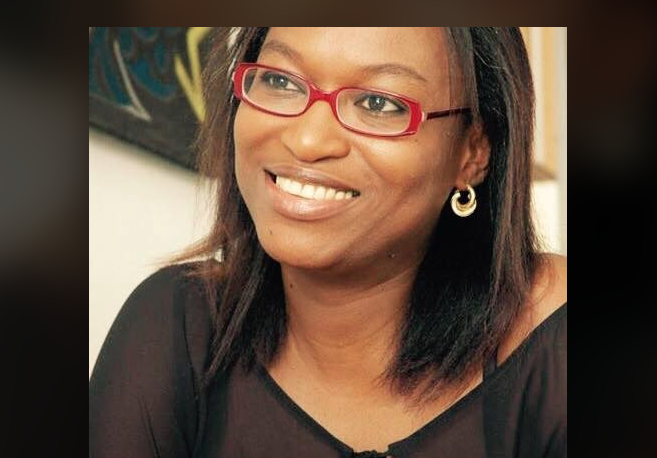
“Senegalese journalist calls for help!” That is the title of a note received by AfricTivistes from Dié Maty Fall, a reporter at the national daily newspaper Le Soleil. She says she is being harassed in the course of her work. She has been forbidden to write commentary on the grounds that such coverage directly involves the State of Senegal and could have immediate diplomatic consequences for the country’s interests. She says that, on one occasion, after she had left work, her article was deleted and replaced with an unedited newswire report bearing her name, without her having worked on it or given her permission. She also says that on Thursday 27 August at 2 pm, she received a request to explain herself for carrying out her work covering international news. Since then, a journalist of her calibre has been confined to writing summaries of press releases. Another form of psychological abuse, she says, is being required to write about politics when personal ethics, professional standards and all codes of conduct strictly forbid it, because she is a member of the PS political bureau, its Secretary for Communications and Deputy Spokesperson.
Today, she is kept away from everything to do with the running of the department and the newsroom, as if, she says, she were a leper and not a senior journalist. She says she was stunned to arrive at work one Monday and discover that her workspace, along with those of two colleagues, had been abruptly moved without prior notice.
In his defence, the Director of the national daily Le Soleil says that since his appointment to the paper on 6 December 2017, he has never once sent Dié Maty Fall a request for an explanation. He acknowledges, however, that he drew her attention to the negative impact of her articles and commentary on international political issues and asked her to stop writing them. He says she did so again the next day, 26 August 2020, by “explaining the reasons for tensions in the Mediterranean between Turkey and Greece”. He says these articles involved Senegal, through its government newspaper, in disputes between two friendly countries. Yakham Mbaye also acknowledged that, in articles which were fortunately shelved, she had criticised the policies of the Presidents of the United States and countries in the sub-region. In addition, he argues that she cannot use her membership of a political party, where she is Deputy Spokesperson, to dictate the content of her writing to her employer. He also says that Dié Maty Fall has never invoked the conscience clause. As evidence, he points out that in the Friday 3 September 2020 edition of Le Soleil, she wrote a report on a meeting of the leadership of the political party to which she belongs.
In response to the journalist’s concerns, AfricTivistes, which is highly attentive to freedom of expression and, by extension, press freedom, simply recalls the provisions of Senegalese law governing the media sector. Article 6 of Law No. 2017-27 of 13 July 2017, the Press Code, provides that journalists and media technicians have the right to refuse to carry out any act, and in particular to refuse to express an opinion contrary to the rules of their profession or to the conscience clause. They must not face any sanction for refusing. Article 7 of the same law states that journalists have the right to refuse any directive or subordination that runs counter to the editorial line of the media company for which they work. That editorial line must be communicated to them in writing. The new Press Code, adopted in 2017, also clearly states that journalists must gather and process information honestly and impartially, while respecting the public’s right to information. They must defend freedom of information and the rights it entails, including freedom of comment and criticism, and the independence and dignity of the profession.
AfricTivistes notes that the current Director-General of Le Soleil has had conflicts with staff before. Some have been dismissed and then rehired; others have been pushed to resign or later rehired. The cases of Mor Sylla, Bouba Sow, Serigne Mansour Cissé, Samboudian Camara, Fatou Ly Sall Croquette and Mbaye Sarr Diakhaté are worth recalling. At RTS, Director-General Racine Talla is also accused of fuelling workplace disputes. According to a statement issued by Synpics last June, the Director-General ordered some employees’ salaries to be suspended without notice or a prior disciplinary decision. The statement also says that he continues to abuse his power by refusing to pay travel expenses to those entitled to them, on the grounds that such payments would be a luxury.
At the Senegalese Press Agency (APS), the Director-General recently dismissed Yaye Fatou Diagne and Fatou Diop Wade, respectively Head of the Agency’s Commercial Department and Head of its Administrative and Financial Department, before suspending Ahmadou Bamba Kassé, a journalist at the same organisation.
AfricTivistes believes that all this brings the debate about the management of national media back to the fore. We strongly condemn the harassment suffered by journalist Dié Maty Fall.
The press is so important to democracy that efforts should be made to depoliticise it and entrust it to genuine professionals, free from political affiliation and able to run these organisations in accordance with professional ethics and standards — essential safeguards for democracy and transparency in the implementation of public policy.
AfricTivistes calls on the Director-General of Le Soleil to prioritise dialogue and negotiation in his dealings with staff. We also call on him to create a more peaceful working environment and restore journalists’ full freedom.
AfricTivistes urges media professionals, in both the private and public sectors, to show solidarity and pool their efforts to ensure journalists have a safe and healthy environment in which to work.
AfricTivistes calls on the President of the Republic to review how public media are managed and to introduce reforms that will create national media worthy of the name: media serving the public, open to all viewpoints in the country, and staffed by journalists who can work freely and thrive in their profession.