Launch of the West African Democracy Solidarity Network (WADEMOS) and conference on combating threats to democracy in West Africa
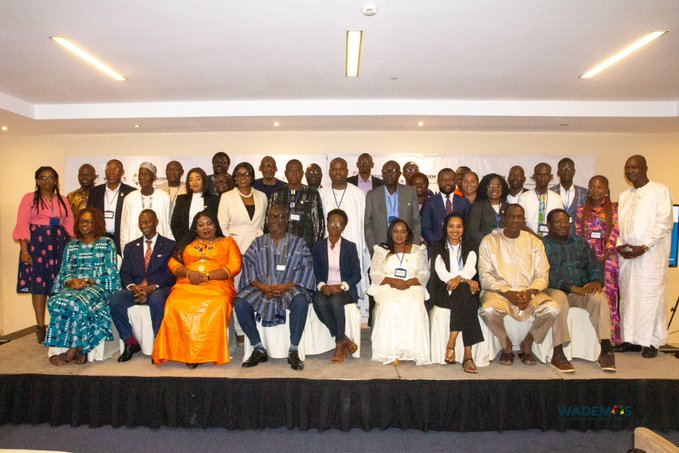
Accra (Kempinski Hotel), 14–16 September 2022
At the invitation of CDD Ghana (Ghana Centre for Democratic Development), the lead organisation of the Wademos network, Maurice THANTAN, a member of the Core Team, Democracy and Governance Project Manager and AfricTivistes’ focal point in Benin, took part in the launch ceremony for the network as well as in the conference on the theme ‘ Combating threats to democracy in West Africa ’ which followed. Both events took place from 14 to 16 September 2022 in Accra, Ghana.
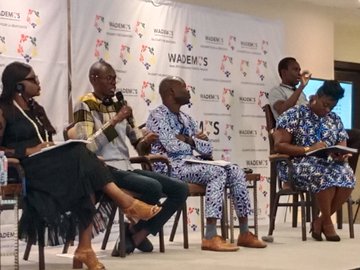
On 14 September, the founding members of the West African Solidarity Network for Democracy met to approve the organisation’s constitution. But before that, officials from CDD Ghana took the time to outline the historical context of Wademos. It is important to note that the idea of establishing such an initiative arose from the widespread observation of a general decline in democratic gains across the sub-region. This is characterised by military governments, attempts to circumvent term limits, the shrinking of civic space and the rise of religious extremism, amongst other factors.
On 15 September, the Conference on Combating Threats to Democracy in West Africa opened. It marks the first flagship event aimed at the general public organised by the Wademos network. Its commencement was preceded by the official launch ceremony for the network itself. This event lasted half a day and featured speeches by various dignitaries. Those present or represented included Prof. Kuassi Prempeh, Executive Director of Wademos; the ECOWAS Resident Representative in Ghana; a representative from the Ghanaian Ministry of Foreign Affairs; a representative from the Swedish International Development Cooperation Agency; and others.
The conference itself began in the early afternoon with an opening panel entitled ‘Setting the scene: The State of Democracy in West Africa. ” The panellists were Dr Aderemi Ajibewa, Director of Political Affairs at ECOWAS; Barrister Ebere Ifendu, President of the International Women’s Forum; and Dr Aliou Barry, Executive Director of Stat View International. The panel, moderated by Austin Aigbe, Programme Officer at CDD West Africa, featured Dr Boniface Dulani, Director of Surveys at Afrobarometer, as the keynote speaker.
16 September 2022 was the second and final day of the conference. A series of three panel discussions took place throughout the day.
“Conflict, peace and security threats in West Africa”, was the title of the first panel discussion of the day. It was led by Dr Fredline M. Cormack Hale (Institute for Governance Reform), William Lifongo (United Nations Office for West Africa and the Sahel) and Mariam Diallo Drame (Women’s Leadership and Sustainable Development – Mali). Dr Festus Aubin was the keynote speaker and the panel was moderated by Omolora Balogun from Wacsi.
The third panel discussion focused on the theme ‘ An examination of ECOWAS’s responses to the presidential term-limit programme and political transitions in West Africa ’. Professor Kwasi Prempeh (CDD-Ghana), Marcella Samba (National Election Watch – Sierra Leone) and Professor David Dosseh (Front citoyen Togo debout) shared their views on the subject. The panel was moderated by Dr Kodjo Asante (CDD-Ghana) and featured Dr Aderemi Ajibewa (ECOWAS) as the keynote speaker.
Finally, a final panel discussion focused on the topic ‘CSO and citizen responses to the democratic backslide in West Africa’. The panellists for this session were Maurice Thantan (Africtivistes) and Oumar Mboup (Jammi Gox Yi – Senegal). Omolara Balogoun was the keynote speaker on the topic. Kathleen Ndongmo chaired the session.
It should be noted that all the panel discussions were followed by plenary sessions during which the audience participated by making contributions and asking questions of the speakers.
As mentioned in the previous panel, Maurice Thantan, representing Africtivistes at this event, had the opportunity to speak as a panellist during the fourth discussion. In line with the mission’s guidelines and drawing on Africtivistes’ experience, his presentation was divided into three parts following a general introduction.
–Background
It was first pointed out that the contextual factor which the various speakers had failed to mention since the start of the conference is the fact that the heads of state in the sub-region are increasingly taking responsibility for the democratic backsliding in their respective countries. It was then stated that the sub-region’s characteristically large youth population represents both an opportunity and a threat, depending on the democratic direction and opportunities offered by the leaders of today and tomorrow.
–On the need for global innovation
Civil society must completely rethink its approach to social movements and advocacy for democracy in the region. The strategies that worked in the early 1990s are less effective in 2022 and will be even less so in the years to come. Not only have regimes learnt from these approaches, but technology has also evolved, and new actors on the ground need to be reached through different methods.
In this regard, Civic Tech offers a very serious alternative that should be taken into account, and AfricTivistes has a wealth of experience to share on this subject.Civil society must completely rethink its approach to social movements and advocacy for democracy in the region. The strategies that worked in the early 1990s are less effective in 2022 and will be even less so in the years to come. Not only have regimes learnt from these approaches, but technology has also evolved, and new actors on the ground need to be reached through different methods.
In this regard, Civic Tech offers a very serious alternative that should be taken into account, and AfricTivistes has a wealth of experience to share on this subject.
–Solidarity in defence of press freedom and freedom of expression
The decline in democracy in the sub-region goes hand in hand with a decline in press freedom and freedom of expression, resulting from the shrinking of civic space. Most countries in the sub-region have fallen in press freedom rankings and are witnessing violent crackdowns on protesters, including internet shutdowns at critical times such as during elections.
These developments, which are becoming increasingly commonplace, must be countered through support for the media and through active solidarity within civil society.The decline in democracy in the sub-region goes hand in hand with a decline in press freedom and freedom of expression, resulting from the shrinking of civic space. Most countries in the sub-region have fallen in press freedom rankings and are witnessing violent crackdowns on protesters, including internet shutdowns at critical times such as during elections.
These developments, which are becoming increasingly commonplace, must be countered through support for the media and through active solidarity within civil society.
–The education of young people
In Africa, young people under the age of 35 account for around 70 per cent of the population. They therefore represent an opportunity if public authorities manage to meet their demands for socio-economic rights, but above all their demand for good governance, which goes hand in hand with a vibrant democracy. This young generation also poses a potential threat in the context of the rise of violent extremism if young people fall victim to the social injustice resulting from poor governance caused by the decline of democracy.
It is up to civil society to help young people find their way onto the right path. This must involve stepping up training and awareness-raising initiatives aimed at young people. In this regard, AfricTivistes has developed a MOOC on the African Charter on Democracy, Elections and Governance. This is an initiative that could be expanded as part of the Wademos programme.