Could we take a more measured approach to achieving the ECOWAS Vision 2020 by 2030?
The mantra “ECOWAS of the People” gained popularity when ECOWAS Vision 2020 was adopted in June 2008. Since its adoption, many citizens have remained sceptical about the people-centred agenda it promotes. Many civil society actors are unfamiliar with ECOWAS’s history, policies and institutions. In its Revised Treaty of 1993, ECOWAS called on the regional community to work with regional civil society organisations (CSOs) and encourage broad citizen participation in the integration process. This marked a significant change in both the structure and nature of cooperation in West Africa: a shift towards a more “people-centred” agenda and away from the overly state-centred approach of the past.
Sadly, citizens across West Africa have yet to feel the benefits of this vision. Informal conversations with entrepreneurs and people travelling around the region reveal the difficulties faced by many local businesses and citizens of the Economic Community of West African States (ECOWAS) when travelling between member countries.
ECOWAS of the People?
Local industrialists face strong resistance at land, air and sea entry points because the authorities in these countries prevent them from exporting locally manufactured products that meet international standards. These are the sad, and sometimes anecdotal, stories told by many businesses and citizens. In addition, the large number of roadblocks on major roads in some ECOWAS Member States poses a serious challenge to promoting free trade and regional integration. It is astonishing that such practices persist in the region after 45 years of regional integration and diplomatic relations.
A more recent reminder of the challenges facing the region’s integration project came in October 2019, when Nigeria closed its borders to the movement of goods. The measure, intended to curb smuggling, drove up prices and threatened free trade across the region. Such measures run counter to the ECOWAS Protocol on the Free Movement of Goods, Services and Persons. Nigeria is a member of ECOWAS and wields considerable political and economic influence within it.
These examples clearly show that ECOWAS Vision 2020, which aims to facilitate the transition from an “ECOWAS of States” to an “ECOWAS of the People”, has serious shortcomings. The vision was adopted to ensure that citizens benefit from a borderless, prosperous and cohesive region. Yet it is clear that this agenda — an ECOWAS of the People — will not be achieved by the end of 2020.
The role of civil society and the media
It is increasingly clear that deeper engagement with civil society at large, and collaboration across sectors, are essential and urgent to the regional integration process. This reinforces the consensus that organised civil society, many of whose members have earned the public’s trust, must play a vital role in informing voters and bringing their concerns to the forefront of regional policymaking. The 1993 Revised ECOWAS Treaty called for broad participation by CSOs and all citizens in the integration process.
There is a clear consensus among stakeholders that, for this project to succeed, it must move from a state-centred approach to a people-centred one, with civil society playing a key role.
However, the role of civil society organisations (CSOs) in regional integration remains negligible. This is mainly due to a lack of information and the capacity to engage. When engagement has taken place, it has been seen as hostile and confrontational. Only a limited number of CSOs engage with the “regional community”, creating a clear disconnect between community stakeholders and the work of ECOWAS.
This disconnect can be addressed through mechanisms that:
- Raise civil society’s awareness of its role in regional integration processes;
- Establish accessible channels between ECOWAS and its citizens;
- Strengthen CSOs’ operational capacity to articulate and influence regional integration policies;
- Share essential knowledge of ECOWAS history and policies with CSOs;
- Identify areas where civil society has a comparative advantage in regional integration initiatives, both within civil society and in its work with ECOWAS; and
- Support networking and collaboration among civil society, policymakers and the private sector on regional integration issues.
Although this is not enough, it is encouraging to see CSOs taking an increasingly visible role by engaging directly with ECOWAS on a wide range of policy issues. These include civic engagement, governance, early warning, the proliferation of small arms, gender equality, election observation, HIV/AIDS, women’s rights, debt, trade, human rights and the culture of impunity. This space for independent, direct engagement between civil society and ECOWAS is crucial to strengthening civil society’s ability to contribute meaningfully to ECOWAS’s people-centred agenda.
The way forward
This development gives citizens’ groups an opportunity to take deliberate action to bring ECOWAS to people’s doorsteps. Civil society should seize this opportunity to:
- Disseminate information about ECOWAS widely and tailor it to different audiences, including the media, academia, parliamentary assemblies and schools. Civil society has a responsibility to ensure that the vision of an ECOWAS of the People is widely promoted.
- Improve coordination around independent engagement with meetings of ECOWAS ministers and heads of state, and make greater efforts to convey civil society’s findings and recommendations to government officials. This will advance a people-centred ECOWAS, strengthen civil society advocacy and help build a genuine relationship between citizens and leaders across West Africa.
- Mobilise resources and support to strengthen engagement between ECOWAS national units and civil society. This would help West African citizens gain access to ECOWAS institutions and make information about ECOWAS processes as widely available as possible.
As a social justice activist, I have come to see that efforts to promote people-centred regional integration depend on the quality of collaboration between civil society, governments and the private sector. Reimagining a more coordinated relationship between these three sectors would give the region a better chance of achieving the ideals of Vision 2020 over the next decade.
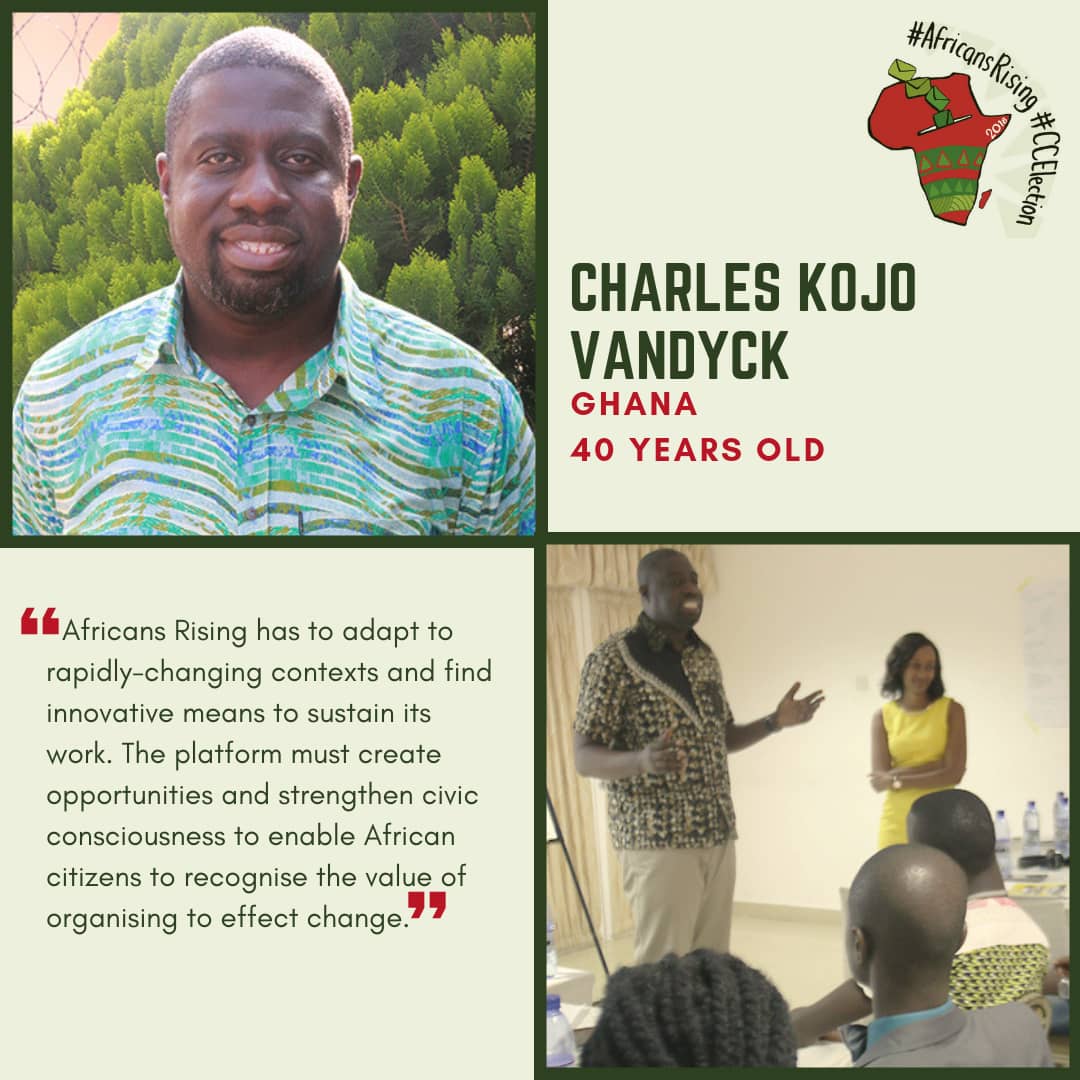
The author, Charles Kojo Vandyck, is Head of the Capacity Development Unit at the West Africa Civil Society Institute.