African youth contribute to the AU Democracy and Governance Innovation Paper
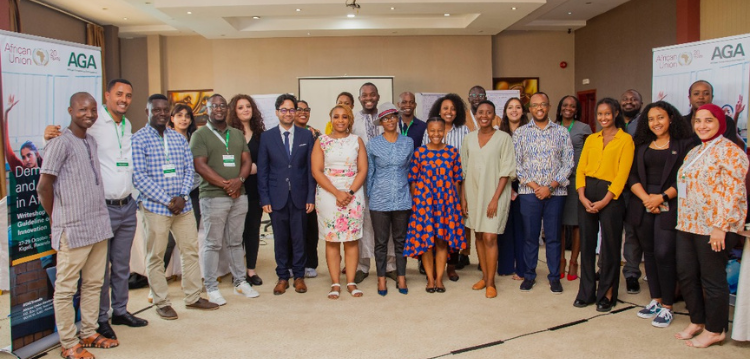
The African Governance Platform (AGA) and the African Peace and Security Architecture (APSA) organised a writing workshop from 27 to 29 October 2022 to develop a paper on youth innovation for democracy and governance in Africa. Youth are often at the forefront of the changes in governance, and they often stand out for their creative thinking on technological and social innovations. Consequently, the AGM and APSA involved youth in the drafting of a “master document” which will serve as a guideline for the African Union and its specialised institutions.
Fifteen young people from all regions of Africa, including AfricTivistes’ Advocacy Assistant, Abdou Aziz Cissé, took part in the writing workshop on innovation in democracy and governance. His participation in this continental meeting is also part of activities of the “Youth Political and Civic Engagement Cohort” of the Democracy Summit launched on the International Day of Democracy. The European Commission, the governments of Nepal and Ghana, the European Partnership for Democracy, AfricTivistes and the European Network of Young Democrats co-lead this youth cohort.
This writing workshop held in Kigali sought to encourage the creativity of African active voices for more innovation in democratic governance. Also, it was an opportunity to initiate discussion with and for young people to promote democracy and good governance and to document the issue.
The meaningful engagement of youth in democratic governance processes is of crucial importance to the African Union (AU) through the normative and institutional frameworks established by the Union such as Agenda 2063 and the African Youth Charter.
It is acknowledged that the innovative potential of youth is triggered and shaped by many factors: necessity, creativity, the search for solutions to problems and the desire to fill political gaps.
During the Kigali meeting, a bottom-up strategy was adopted with the help of several facilitators. Accordingly, the sessions were organised in small groups, each of which was assigned a specific question to facilitate the work of writing the framework document on innovations in democratic governance. The participants were able to draw up a first draft based on the contributions of the different groups.
The workshop participants also identified barriers and obstacles that the AU, through its continental mandate, could address. These obstacles are mainly socio-cultural:
- Multilingual nature of the continent which hinders the scalability of innovations across community and national borders;
- Barriers at national level – official languages (English/French, etc) versus national languages;
- Barriers at continental level – Francophones, Anglophones, Lusophones;
- Cultural divide/disconnection that may exist between African cultural systems that have their own values and principles of democratic governance and a certain way of conceptualising modern democratic values.
At the end of these three days of intensive brainstorming, discussion and writing sessions, the workshop concluded with the polishing, consolidation and final revision of the working drafts. These were consolidated by high-level presentations and a peer review of the “master document”. Participants had the opportunity to give and receive feedback. This feedback will be used for final revisions and adjustments before the final drafts are handed over to the AGA Secretariat and APSA teams.