FEATURE?: African presidents: life after power!
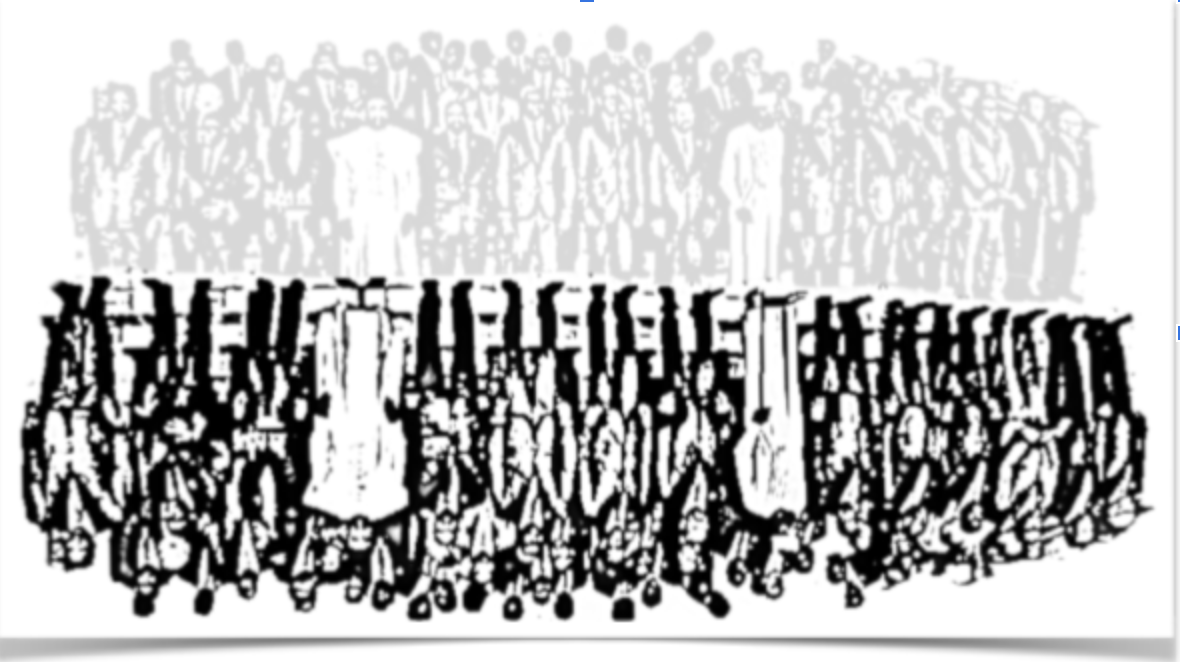
More than a hundred people have held the highest offices of state across the 55 countries of the African continent. Some died while in office. Others appear to have signed an “indefinite contract” with the office of President. Elsewhere, politicians have been forced from power by popular revolutions or uprisings, or simply by armed coups. Alongside those who cling to power and those forced to leave it, there are leaders who have stepped down following free and democratic elections.
Some former residents of Africa’s “White Houses” remain privileged figures in political life; others have retired from public view.
Politics is often synonymous with the pursuit of power and the presidency. But in Africa, hereditary succession and the lifelong seizure of power have become common trends. The office of Head of State is highly coveted, and often subject to manipulation to make it inaccessible to others and permanent for the person in power. In these young nations, most of which are celebrating 50 years of independence, some Heads of State have already set records: Muammar Gaddafi of Libya ruled for more than 40 years, Paul Biya of Cameroon for 36, Félix Houphouët-Boigny of Côte d’Ivoire for 33, and Lansana Conté of Guinea for 24. Some have spent record-breaking periods in power; others have held the office of Head of State for only a fleeting moment.
What becomes of the people who have had access to the most closely guarded files of political power?
While political analysts and other experts focus on the longevity of Africa’s current Heads of State, we are studying their lives after power. How do former African Heads of State reinvent themselves? Are they able to return to active life? How do they experience retirement? Do they retain institutional privileges? Do they have a special status as former Heads of State? Do they become persona non grata in their own countries? Do they remain in politics in an effort to regain power?
These are some of the questions we will explore in order to assess the social and political circumstances of retired Presidents.
Our study focuses on 20 countries with different political realities but shared democratic aspirations.
Countries included in the study
| The Gambia | Togo | Côte d’Ivoire | Gabon | Cameroon |
| Nigeria | Tunisia | Ghana | Chad | DRC |
| Madagascar | Guinea-Bissau | Benin | Niger | Congo |
| Senegal | Guinea | Mauritania | Mali | Burkina Faso |
With an average of 58 years of independence, these countries have had more than 121 Heads of State between them. That amounts to an average of 11 Presidents per country, if we assume a five-year term. This reflects the instability of the statutory and constitutional term of office for Heads of State in Africa. Our study focuses exclusively on presidential retirement in Africa, particularly in these 20 countries. It also examines the length of presidential terms, longevity in power, attempts to regain power after losing it, and forced or violent departures. One section looks at the departures and successful career changes of some Heads of State.
Presidents for life?
In 2014, the world’s five oldest-serving Presidents were all African: Robert Mugabe, José Eduardo dos Santos, Teodoro Obiang Nguema, Mohamed Abdelaziz and Paul Biya. Between them, they had spent 182 years in power. In Uganda, the President, who has been in office since 1986, passed a law removing the age limit for presidential candidates. After changing the Constitution to his advantage to avoid ever leaving office, Ugandan President Yoweri Museveni, then 33 years in power, could now seek as many terms as he wished for as long as he remained alive.
Attempts to stay in power for life have eventually brought down some Heads of State. Elected in 2000 in Senegal’s first transfer of power following an election, President Abdoulaye Wade faced a strong civic and political mobilisation in 2011. His decision to seek a third term, though accepted by the Constitutional Council, was strongly opposed by the public. He was eventually defeated in the second round and conceded.
In 2014, an unprecedented popular uprising forced President Blaise Compaoré to relinquish power after 27 years. Seeking a fifth consecutive term, he proposed amending the Constitution to remove the presidential term limit. On 30 October 2014, overwhelmed by the scale of the social movement, he resigned and went into exile. After spending a few weeks in Morocco, Compaoré settled in Côte d’Ivoire, where President Alassane Dramane Ouattara first granted him a diplomatic passport and later Ivorian nationality.
Cameroon, which became independent in 1960, has had only two Presidents in 59 years of political history. After Ahmadou Ahidjo’s 22 years in power (1960–1982), Paul Biya marked 37 years in office in 2019. Following a constitutional revision passed in 2008, President Biya gave himself the right to stand for re-election yet again.
Article 6: The President of the Republic is elected for a term of seven (7) years. He is eligible for re-election.
Extract from Article 6 of the Constitution of Cameroon
The length of presidential terms often determines the nature of a transition. In Tunisia, in 2010, President Zine el-Abidine Ben Ali faced several days of popular protests, with demonstrators demanding that he rule out standing for re-election in 2014. Forced out by the wave of protests, he went into exile in Saudi Arabia, where he died on 19 September 2019, aged 83, after being sentenced to five life terms and more than 200 years in prison.
More recently, in Algeria, President Abdelaziz Bouteflika had to yield to public pressure demanding his departure after 20 years in power. For several years, his public appearances and speeches had been rare because of his health (he used a wheelchair) and his age (85 in 2019). First elected in 1999, he was preparing to ask the Algerian people for a fifth term. He resigned on 2 April 2019.
Which countries have had the longest-serving Heads of State?
Cameroon, with two Presidents, Gabon with three and The Gambia with three have the longest-serving Presidents in power. Gabon’s Constitution does not limit the number of terms a Head of State may serve. During the 2017 constitutional reform, the opposition called for a presidential term limit, but the proposal was rejected. Under the new Constitution, as under the previous one, the President “is elected for seven years and is eligible for re-election”. From father to son, President Omar Bongo and his son Ali have spent a combined 51 years in power.
Although Morocco and Djibouti are not included in this study, they also feature among the countries with the longest-serving leaders. Morocco’s King Mohammed VI and Ismail Omar Guelleh, President of the Republic of Djibouti, both came to power in 1999 and remain in office. The list also includes Denis Sassou-Nguesso, President of the Republic of the Congo, who came to power in 1997 after an earlier term from 1979 to 1992; Idriss Déby, President of Chad since 1990; and Omar al-Bashir, President of Sudan from 1989 to 2019.
At 77, President Teodoro Obiang Nguema has led Equatorial Guinea since 1979 — 40 years.
A quiet retirement: when you leave power, you keep quiet!
Asking about “presidential retirement” also means asking how leaders transition out of power. The nature of retirement is often determined by how the end of a presidency was brought about.
In Mali, Alpha Oumar Konaré, the country’s first democratic President, began his retirement in institutional roles, serving as Chairperson of the African Union Commission from July 2003 to 2009. He was a member of the High Council of the Francophonie and is also among the founding members of the Collegium International, an ethical, political and scientific body. After these institutional roles during the first ten years of his retirement, he chose a genuine political retirement, simply deciding not to influence political life. Although he still lives in Mali, he has clearly distanced himself even from the most sensitive current affairs. In his interview book Alpha Oumar Konaré, un Africain du Mali, Bernard Cattanéo gives the former President an opportunity to reflect on his ten years in office. Konaré did not hesitate to challenge his predecessor, Moussa Traoré, whom some suspect of trying to discredit democratic gains through political statements in the media.
In total, three former Malian Heads of State account for 40 years in power, divided between political interventions and, where necessary, abstention. Amadou Toumani Touré experienced two retirements after leaving power. He first served as President from 1991 to 1992 after overthrowing Moussa Traoré, then spent eight years out of office before returning in 2002. He resigned in 2012. His second retirement did not go smoothly: he was forced to spend five years in exile in neighbouring Senegal.
In Senegal, from 2000 to 2014, former President Abdou Diouf withdrew completely from the country’s political life. After becoming Secretary-General of the Organisation internationale de la Francophonie, he made no comment on the 2011 political crisis or the turbulent 2012 presidential election.
Should former Heads of State have a special status?
“Former African Presidents need a special status to safeguard emerging democracies and entrench the principle of presidential term limits. In other words, if the nation, as constituent power and law-maker, does not make provision for life after power, democratic alternation risks being seriously undermined: the incumbent President could be tempted to change the rules of the game pre-emptively, using sovereign constitutional revision powers to remain at the top; and a defeated President could plot against a successor to erase the humiliation of a ‘total’ loss of power and/or protect himself from vexatious legal proceedings. Democracy is likely to take root in Africa only if those who have served the nation are granted a generous status.”
— Stéphane Bolle, Senior Lecturer in Public Law (HDR)
Active “political” retirements
In Ghana, the National Democratic Congress chose former President John Mahama Dramani, aged 60, as its candidate for the 2020 presidential election. He came to power in 2012 after defeating Nana Akufo-Addo, then lost to the same rival four years later, in 2016. Today, after a period of retirement, he is resuming his political activities.
In Mauritania, even before announcing that he would not amend the Constitution to seek a third term, President Mohamed Ould Abdel Aziz told his compatriots that he would return after his successor’s term, as Russian President Vladimir Putin had done.
This seems to be a new direction for African Heads of State, raising the question of term length alongside that of the number of terms.
Although long-serving regimes have appeared to be the norm in many countries on the continent since independence, some former African Heads of State have left office and nevertheless maintained an active political life.
In Senegal, Abdoulaye Wade, a longstanding political opponent who became President in 2000 and served for 12 years, remains politically active at the age of 93. Since losing power to President Macky Sall in 2012, this political veteran has continued to lead the Senegalese Democratic Party (PDS), considered the main opposition party.
In Mali, soldier Amadou Toumani Touré became President of a one-year transition in March 1991 after overthrowing Moussa Traoré’s regime following a popular revolt. He handed power to Alpha Oumar Konaré, who was democratically elected in 1992. After Konaré’s two terms, Touré returned to politics, stood as a civilian and was elected for two successive terms, from 2002 to 2012, when he was overthrown in a military coup. Although ATT ran as an independent candidate in 2002, several political parties rallied behind him.
Henri Konan Bédié, heir to Ivorian independence leader Félix Houphouët-Boigny, was President from 1993 to 1999. After going into exile in 1999, he continued to represent the Democratic Party of Côte d’Ivoire (PDCI), despite internal disputes. Since 2005, Bédié has led the PDCI and the Rally of the Republicans (RDA), a breakaway party created by Alassane Ouattara, now part of the governing coalition. Bédié has announced his intention to stand in the 2020 presidential election if nominated by the PDCI.
In Nigeria, career soldier Olusegun Obasanjo first became President from 1976 to 1979, during a transitional administration. He was the first military leader to hand power peacefully to an elected civilian, Shehu Shagari. He returned in 1999, was elected as a civilian and served two terms until 2007. Obasanjo was the first Nigerian to serve both as a military Head of State and as a civilian President, before the current President, Muhammadu Buhari.
At the end of his second term, Obasanjo became chair of his party’s board, the People’s Democratic Party (PDP). He resigned from the post in 2012 and withdrew from PDP activities, but returned to the party in 2018.
After one term at the head of Ghana (2012–2017), John Dramani Mahama lost the 2016 election to his political opponent Nana Akufo-Addo. His party, the National Democratic Party, selected him as its candidate for the 2020 presidential election. He was expected to run against incumbent President Nana Akufo-Addo. It would be their third contest.
Less than a year after he peacefully handed power to Félix Tshisekedi, in a historic moment for the Democratic Republic of the Congo, a country beset by political instability, former Head of State Joseph Kabila, now a senator for life, remains highly active in the country’s political life.
With a majority in Parliament, his Common Front for Congo (FCC) coalition, built around his People’s Party for Reconstruction and Democracy (PPDR), holds the Prime Minister’s office and the presidency of the Senate, as required by the Constitution. The FCC also has a majority in the National Assembly.
Madagascar is unusual in that its former Presidents have remained in the country’s political arena: Didier Ratsiraka (1975–1993 and 1997–2002), Marc Ravalomanana (2002–2009), Andry Rajoelina (2009–2014 and 2019 onwards) and Hery Rajaonarimampianina (2014–2018). After nine years in exile, Didier Ratsiraka returned home and stood in the 2018 presidential election. He was eliminated in the first round, receiving just 0.45% of the vote.
Hery Rajaonarimampianina resigned as President in September 2018 and declared his candidacy, as required by the Malagasy Constitution to be eligible for re-election. Unfortunately, he lost.
Marc Ravalomanana resigned in 2009 under popular pressure. Despite a fine, a four-year prison sentence for abuse of power, hard labour for the deaths of demonstrators in 2009 and exile in South Africa, Ravalomanana remained undeterred and tried to take part in subsequent presidential elections. In the most recent election, held at the end of December, he lost in the second round to his longtime rival Andry Rajoelina.
Following the disputed 2002 election, former President Didier Ratsiraka went into exile that year and took part in talks to stabilise the country in 2009. He tried to stand in 2013 but was unsuccessful. He also ran in the 2018 presidential election but failed to reach the second round.
Another former President rarely in the public eye, Norbert Lala Ratsirahonana, remained outside political life after serving as interim President in 1996–1997. In 2018, he broke his silence to declare his support for Andry Rajoelina, who went on to win the election.
In Benin, Nicéphore Dieudonné Soglo (1991–1996) was the first President elected in a multiparty election since 1972. After losing to the late President Mathieu Kérékou in 1996 and 2001, he became leader of Renaissance of Benin in 1994. He was elected Mayor of Cotonou in 2003 and 2008.
Little had been heard about former President Thomas Boni Yayi (2006–2016) since the end of his two terms, until recently. He and former President Soglo joined forces to protest in April against the electoral process, which excluded opposition parties from the 28 April election because of new requirements imposed by the CENA.
Forced and violent departures: exile or prison?
In the struggle for longevity in power, others have been forced out. Should some former Heads of State be granted a special status? What kind of retirement is possible for those forced or compelled to leave office?
“In the name of public morality, the nation could legitimately refuse to pay — or continue paying — from the state budget a former dignitary who did not come to power in accordance with the Constitution and other rules of law; who was forced from office after being removed for a criminal offence or mismanagement; who received a final criminal conviction; who failed to submit their final declaration of assets as required, or whose declaration reveals unjustified enrichment; who seriously breached their oath of office; or who, to avoid double remuneration and conflicts of roles, has not withdrawn from active public life, continues to seek office and holds certain constitutional positions. Otherwise, former Presidents will appear to be illegitimate beneficiaries, and confidence in the virtues of democracy will fade.”
— Stéphane Bolle, To Former Presidents, the Grateful Nation…
In Niger, President Mamadou Tandja (first term 1999–2004, second term 2004–2010) was overthrown in a coup led by Commander Salou Djibo, Head of State from February 2010 to April 2011. Initially placed under house arrest, he was transferred to prison in January 2011. He was released a month after the new President, Mamadou Issoufou, took office in March 2011.
Since October 2014, former President of Burkina Faso Blaise Compaoré has been in exile in Côte d’Ivoire, where he acquired Ivorian nationality.
Amadou Toumani Touré, former President of Mali, lived in Senegal for five years (2012–2017) after the coup that ended his time as Head of State. He returned to Mali in December 2017 and has kept away from political issues, although he was consulted about a possible national dialogue that has been in preparation for some time.
In The Gambia, former President Yahya Jammeh left office ignominiously after 22 years in power and has lived in exile in Equatorial Guinea since 2017. He is now suspected of embezzlement and may face prosecution on various charges, including embezzlement and corruption.
In Chad, President Hissène Habré, who spent eight years in power, took refuge in Senegal after a coup orchestrated by Idriss Déby in 1990. He lived in Senegal for 29 years, where he was arrested and tried before the Extraordinary African Chambers. In May 2016, he was found guilty of crimes against humanity, rape, executions, slavery and abductions. He is serving his sentence in the Senegalese capital, where his family also lives.
In Cameroon, President Ahmadou Ahidjo’s fall from power led to his exile in France, Spain and Senegal, where he settled. He died seven years later and was buried in Dakar.
In Guinea, the two former Presidents who are still alive are in exile. After a series of coups and turbulent transitions, both found refuge outside the country. Moussa Dadis Camara, who spent two years in power, ended up in Burkina Faso, after a brief stay in Morocco, for health reasons following a failed coup attempt against him. He resigned from the presidency in the Burkinabè capital. He did not remain silent after leaving office in December 2009. Five years later, he announced his intention to stand in the 2015 presidential election. His controversial candidacy was eventually rejected by the Constitutional Court. He still comments on political issues concerning his country and has not ruled out returning home.
Sékouba Konaté, who served from January to December 2010, ended up in Addis Ababa, Ethiopia, at the close of the transition in December 2010. He became High Representative for the operationalisation of the African Standby Force and head of strategic planning and management for the African Union’s peace support operations. He now lives in France. This form of organised exile has already lasted nine years.
In Côte d’Ivoire, following a political crisis and post-election conflict, President Laurent Gbagbo was arrested in April 2011 and transferred to the International Criminal Court in November 2011. On 15 January 2019, after more than seven years in pre-trial detention, the ICC acquitted him. He currently lives in Belgium. His return to Côte d’Ivoire is not yet on the agenda.
In Madagascar, Didier Ratsiraka, President from 1997 to 2002, left the country on 5 July 2002 following political tension and a post-election crisis with his rival and successor, Marc Ravalomanana. He went to France, where he lived for nine years before arranging his return to Madagascar in 2011.
These repeated waves of forced retirement into exile or prison result from political crises, such as attempts to amend the Constitution, or from post-election or pre-election crises.
Successful retirements and career changes
Why does life after the presidency seem like a secondary option for some African Heads of State? Treating the presidency as a job for an indefinite term is incompatible with democratic rules and obligations. Difficult and troubled transitions have never made peaceful retirement and career change easier. When former leaders face serious charges such as embezzlement, crimes against humanity or high treason, it is difficult — sometimes impossible — to return to an ordinary life. Successful retirement and career change are difficult because relationships with power are often far from straightforward. Amid these complex and difficult situations, some statesmen and former Presidents have managed to be exceptions. What should be the natural next step after holding public office has become the exception.
In Ghana, former President Jerry Rawlings seems to have become an ordinary citizen who still takes an interest in political life, regularly speaking to the media and sharing his views. He was recently filmed shopping without bodyguards and walking on foot.
In Nigeria, former President Olusegun Obasanjo is a model of successful career change. After leading his country for eight years, he became a prominent private-sector businessman. Today, President Obasanjo is a farmer, hotelier and property developer. He travels across the continent as an international consultant for ECOWAS on election observation.
Some leaders who left office through free and transparent elections have successfully reinvented themselves. Some became businesspeople; others took senior roles in international or sub-regional organisations.
After leading Senegal for 20 years (1981–2000), Abdou Diouf served three terms as Secretary-General of the International Organisation of La Francophonie. His decision to leave office after acknowledging his election defeat helped establish his reputation and legitimacy for the role.
It is also worth asking whether the prospect of a career in international institutions encourages some Heads of State to relinquish power — a political deal, perhaps? During the 2014 crisis in Burkina Faso that led to Blaise Compaoré’s fall, French President François Hollande wrote to him: “You could then count on France to support you if you wished to put your experience and talents at the service of the international community.” This was a clear invitation to leave office democratically and open the door to another career in international institutions.
Guinean Moussa Dadis Camara left power after negotiations with the King of Morocco, President Blaise Compaoré and foreign powers such as France and the United States.
Former military coup leaders such as Amadou Toumani Touré of Mali, Abdulsalami Abubakar of Nigeria and Sékouba Konaté of Guinea all handed over power democratically and went on to pursue careers in sub-regional and regional institutions.
Life after the presidency
Country statistics
The figures below are reproduced in the order shown in the source table: years since independence; number of Presidents; longest time in power (years); shortest term (months); Presidents retired; Presidents who returned to power after an initial retirement; legal provisions for former Heads of State.
| Country | Figures listed in source order | Living former Presidents |
|---|---|---|
| Senegal | 59; 4; 20; 144; 2; 0; Yes | Abdou Diouf; Abdoulaye Wade |
| Mali | 59; 8; 21; 22 days; 3; 1; Yes | Moussa Traoré; Alpha Oumar Konaré; Amadou Toumani Touré |
| Guinea | 61; 4; 25; 12; 1; 0; Yes | Moussa Dadis Camara; Sékouba Kouyaté |
| Mauritania | 59; 10; 21; 450; 3; 0; Yes | Mohamed Khouna Ould Haidallah; Maaouiya Ould Sid’Ahmed Taya; Ely Ould Mohamed Vall; Sidi Mohamed Ould Cheikh Abdallahi; Mohamed Ould Abdel Aziz Ould Ahel Elya |
| Burkina Faso | 59; 8; 27; 13; 3; 0; Yes | Jean-Baptiste Ouédraogo; Blaise Compaoré; Michel Kafando |
| The Gambia | 49; 3; 24; 27; 0; 10 | Yahya Jammeh |
| Togo | 59; 6; 38; 3; 10; Yes | Abbas Bonfoh |
| Côte d’Ivoire | 59; 5; 33; 10; 2; 0; Yes | Laurent Gbagbo; Henri Konan Bédié |
| Gabon | 59; 3; 41; 8; 1; 0; Yes | — |
| Cameroon | 59; 2; 37; 27; 0; 0; Yes | — |
| Nigeria | 56; 15; 9; 3; 5; 2; Yes | Olusegun Obasanjo; Ibrahim Babangida; Ernest Adegunle Oladeinde Shonekan; Abdulsalami Abubakar; Goodluck Jonathan |
| Tunisia | 62; 6 (1 interim); 30; 11; 2; 0; Yes | Fouad Mebazaa; Moncef Marzouki |
| Ghana | 59; 13; 20; 11; 3; 1; Yes | Jerry Rawlings; John Agyekum Kufuor; John Dramani Mahama |
| Chad | 59; 4; 29; 4; 7; 10; Yes | Hissène Habré |
| DRC | 59; 5; 31; 4; 14; 10; Yes | Joseph Kabila |
| Madagascar | 60; 12; 17; 6 days; 4; 1; Yes | Hery Rajaonarimampianina; Marc Ravalomanana; Didier Ratsiraka; Norbert Lala Ratsirahonana |
| Guinea-Bissau | 46; 9; 12; 29 days; 3; 1; — | Raimundo Pereira; Mamadu Ture Kuruma; Manuel Serifo Nhamadjo |
| Benin | 59; 8; 18; 3; 22; Yes | Nicéphore Soglo; Boni Yayi |
| Niger | 59; 6; 14; 8; 30; Yes | Mahamane Ousmane; Mamadou Tandja; Salou Djibo |
| Congo | 59; 6; 21; 22; 11; Yes | Joachim Yhombi-Opango |
Legal provisions and comments on former Presidents’ status
Guinea
Article 36 of the Constitution of 23 December 1990
Revised by Decree D/2002/48/PRG/SGG of 15 May 2002, promulgating the constitutional law adopted by referendum on 11 November 2001.
Former Presidents of the Republic are given protocol rank immediately after the President of the Republic, in order of the seniority of their term, and before the President of the National Assembly.
They are ex officio members of the Economic and Social Council. They receive material benefits and protection under conditions set out in an organic law.
Mali
Article 52: The law determines the benefits granted to the President of the Republic and sets out how pensions are awarded to former Presidents of the Republic who retain their civic rights.
Former President Moussa Traoré (1968–1991) was overthrown and sentenced to death for blood crimes committed between January and March 1991, following the massacres of 26 March 1991. After 21 years in power, he spent the first part of his retirement in prison, where he and all members of his family were detained. His imprisonment made him the first African Head of State to face justice in his own country in a major trial.
After leaving power, Moussa Traoré lost his civic rights. Alpha Oumar Konaré pardoned him in May 2002. Since his release, former President Moussa Traoré has lived in a large villa in the Djikoroni-Para district of Bamako, provided by the Malian government.
Senegal
Decree No. 2013-125 grants every former Head of State a monthly allowance of CFA 5,000,000.
As a support package, the same statement says, the State of Senegal provides health insurance covering the spouse, two vehicles, a landline telephone, housing and furniture.
According to the Presidency, “if a former President of the Republic declines the allocated housing, they receive a net monthly compensatory allowance of CFA 4.5 million”.
In addition, “the State of Senegal covers, up to CFA 40 million per year, the cost of air tickets for each former President of the Republic and their spouse or spouses”. A former Senegalese Head of State is also entitled to an aide-de-camp, gendarmes to secure their home, two bodyguards, a protocol officer, two assistants, a telephone operator, a cook, a laundry worker and a gardener. All this staff are directly employed and paid by the State of Senegal.
Mauritania
A 2009 decree provides former Heads of State with an annual endowment of 8,400,000 ouguiyas (approximately €21,000), an annual allowance of 1,440,000 ouguiyas, an initial installation grant of 2,740,000 ouguiyas, renewable every five years, and a compensatory allowance of 81,000 ouguiyas.
They also receive benefits in kind: housing, a vehicle, a driver, two domestic staff and two security officers.
Burkina Faso
Since 2009, the law has provided for a pension of CFA 4 million (€6,100) per quarter, along with other benefits, such as a vehicle with a driver and a security detail.
The Gambia
Yahya Jammeh does not receive the benefits provided under the status of former President of the Republic. He has been in exile in Equatorial Guinea since 2016, when he lost the presidential election to his opponent, current Head of State Adama Barrow. Since 2006, The Gambia has had a law granting a status to any former Head of State who served in power for at least ten years. It provides, in particular, for security, due honours and financial commitments.
The benefits include a monthly salary of at least US$2,000, office premises, personal security guards, a secretary, and three official vehicles with fuel paid for by the State until the former Head of State’s death.
Togo
Law No. 2019-003 of 15 May 2019, amending several provisions of the Constitution of 14 October 1992, revised in 2002.
Article 75: Former Presidents of the Republic are ex officio members of the Senate for life. They may not be prosecuted, arrested, detained or tried for acts committed during their presidential terms.
They rank immediately after the incumbent President of the Republic, in reverse order of the seniority of their most recent term, from the most recent to the oldest.
An organic law determines the status of former Presidents of the Republic, particularly their remuneration and security. Former Presidents are expected to have the rank of a head of an institution and receive the same benefits: a monthly allowance of CFA 4 million (€6,100) and staff provided by the State, including a driver and a security officer.
Côte d’Ivoire
Title IV of the legal status of former Presidents of the Republic sets out the financial and material benefits available to anyone who has held the office of President of the Republic.
- A monthly allowance, payable to beneficiaries in the event of the President’s death;
- An office comprising one chief of staff, one protocol officer, one special-assignment officer and two secretaries;
- Three vehicles with three drivers;
- Domestic staff: one maître d’hôtel, one cook, one laundry worker, one gardener and two household staff;
- Medical cover for the spouse and minor children.
On the death of a former President of the Republic, the surviving spouse receives the following benefits in kind:
- One bodyguard;
- One special-assignment officer;
- One private secretary;
- One vehicle with a driver and fuel;
- Domestic staff;
- Health insurance;
- A housing allowance, as well as payment of water, electricity and telephone bills, at rates set by the Finance Act.
Gabon
Former Presidents are ex officio members of the Constitutional Court.
Cameroon
In Cameroon, former Presidents are ex officio members for life of the Constitutional Council. However, although provided for in the Constitution since 1996, the Constitutional Council has never been established.
Former Presidents automatically have immunity as soon as they leave office. “Acts carried out by the President of the Republic in application of Articles 5, 8, 9 and 10 above are covered by immunity and cannot give rise to liability after the end of the President’s term.”
Cameroon Constitution (1996), Article 53, following the 2008 revision.
Nigeria
Nigeria is one of the few countries on the continent to have had 15 Heads of State, including seven official Presidents of the Republic, in 56 years of independence. The Nigerian Constitution automatically grants all former Heads of State membership of the Council of State.
A former Nigerian Head of State receives benefits linked to the office held: personal staff, security staff, vehicles, a diplomatic passport for life, medical services, offices and housing. Former Heads of State and their spouses rank third, after the incumbent President and Vice-President, in the order of precedence for public functions.
Tunisia
A former President receives a monthly annuity of 30,000 dinars (approximately €12,100), equivalent to the salary of a sitting President of the Republic, as well as benefits in kind: a furnished home, with maintenance, telephone, water, gas and electricity bills covered; security staff, transport and drivers; and medical care for the spouse and children up to the age of 25.
A bill under consideration provides that a former President would receive only one-third of a sitting President’s salary, one car, one driver, 500 litres of petrol and a housing allowance.
Ghana–Chad
Article 74 of the Constitution of the Republic of Chad, promulgated on 4 May 2018: The law determines the civil list and other benefits allocated to the incumbent President of the Republic.
It also sets out how pensions and other benefits are awarded to former Presidents who retain their civic and political rights.
Democratic Republic of the Congo
Article 10 of Law No. 18/021 of 26 July 2018 on the status of elected former Presidents of the Republic
The benefits granted to every elected former President of the Republic include:
- A special pension;
- An annual allowance for services rendered;
- Healthcare, a survivor’s annuity and an orphan’s annuity;
- Additional benefits.
Article 18
Every elected former President of the Republic receives the following additional benefits:
- Decent housing provided by the State or a housing allowance;
- A diplomatic passport for the former President, their spouse and minor children;
- Business-class travel documents for the former President, their spouse and minor children;
- Five vehicles for official and personal use, renewable twice after five years;
- A security service with substantial logistical resources, including at least two bodyguards, three members of the former President’s entourage and a unit responsible for guarding their residence;
- Domestic staff, not exceeding ten people;
- Office premises for the former President and their secretariat, which may comprise no more than six people;
- A monthly fuel allocation;
- A monthly allowance for water, electricity and telephone costs.
The procedures for implementing the preceding paragraph are set out in a decree of the Prime Minister adopted by the Council of Ministers.
Madagascar
In February 2016, a decree was adopted setting out the benefits and status of former Heads of State. However, it does not cover former heads of transitional institutions. Article 19 of the status of former Presidents states that they must cease their political activities to receive their rights and benefits. Didier Ratsiraka, Zafy Albert and Marc Ravalomanana can therefore receive the lifetime rights and benefits provided under the special scheme. The question remains as to what applies to Norbert Lala Ratsirahonana, who was interim Head of State at the time. Will he receive the same rights and benefits as former Presidents?
Former Heads of State are appointed senators for life.
Guinea-Bissau–Benin
The law grants a pension equal to the remuneration of the President of the Constitutional Court and an annual representation allowance equal to 50% of the special funds allocated to the President of the National Assembly. It also provides for two bodyguards, two vehicles, secretarial services, domestic staff, two drivers and health insurance.
Niger
Article 58: The law determines the benefits granted to the President of the Republic and sets out how pensions are awarded to former Presidents of the Republic and former Heads of State. Former Presidents of the Republic and former Heads of State are members of the Council of the Republic.
Congo
Article 224 of the 2015 Constitution
Former Presidents of the Republic are entitled, at the end of their terms, to protection by the State, both personally and in respect of their property.
They receive a monthly lifetime pension, the amount of which is set by regulation.
Other benefits and the arrangements for protecting former Heads of State are determined by law.
Article written on 17 September 2019 for the National Democratic Institute (NDI), and published in French and English as a PDF here.